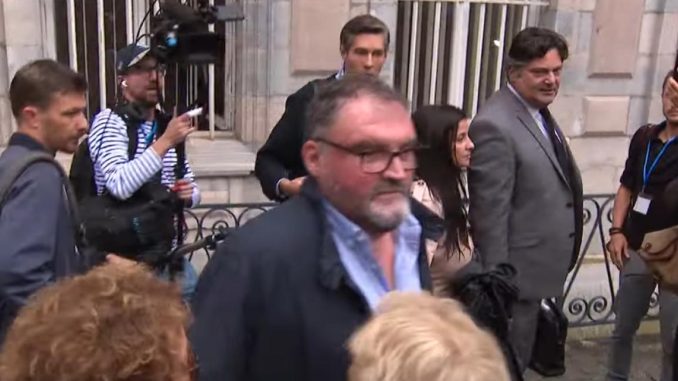
A court in eastern France has sentenced a former anaesthetist, Frédéric Péchier, to life imprisonment for intentionally poisoning no fewer than 30 patients, in a case prosecutors described as one of the most disturbing medical crimes in recent French history.
The ruling was delivered by a court in Besançon, where Péchier was found guilty of contaminating infusion bags with toxic substances, leading to cardiac arrests and severe haemorrhaging in 30 patients, with at least 12 of the victims dead as a result of the poisonings, according to BBC.
Among the victims was a four-year-old child who suffered two cardiac arrests during what was meant to be a routine tonsil surgery in 2016. The child survived.
The oldest victim was 89 years old.
During sentencing, prosecutors issued a blistering condemnation of the former doctor’s actions.
“You are Doctor Death, a poisoner, a murderer. You bring shame on all doctors,” the prosecution said last week during closing arguments. “You have turned this clinic into a graveyard.”
Péchier was first placed under investigation eight years ago, after a series of unexplained medical emergencies raised alarm at two clinics in Besançon.
Investigators suspected that patients had been deliberately poisoned between 2008 and 2017.
The case first came to light following the ordeal of Sandra Simard, believed to be Péchier’s earliest known victim.
Simard, then 36, suffered a sudden cardiac arrest in the middle of spinal surgery. She survived after Péchier himself intervened, but she later fell into a coma.
Subsequent tests on Simard’s infusion bags revealed potassium levels 100 times higher than the expected dose, prompting hospital officials to alert local prosecutors and triggering a lengthy criminal investigation.
Over the course of the 15-week trial, prosecutors detailed a pattern of deliberate tampering with infusion bags, arguing that Péchier targeted patients in a calculated manner, often during routine procedures that carried low medical risk.
Despite the evidence presented, Péchier consistently denied responsibility. While he occasionally acknowledged that some patients who became ill or died may have been poisoned, he maintained that he was not the perpetrator.
“I have said it before and I’ll say it again: I am not a poisoner… I have always upheld the Hippocratic oath,” Péchier told the court.
The judges rejected his defence, concluding that the poisonings were intentional and systematic.
In addition to the life sentence, the court ruled that Péchier must serve a minimum of 22 years in prison before he can be considered for parole.
Notably, Péchier had remained at liberty throughout the trial, despite the gravity of the charges.
Under French law, he has 10 days to lodge an appeal. If he does so, the case will be retried before a new court within a year.
The verdict brings to a close a case that has deeply shaken France’s medical community and raised troubling questions about patient safety, oversight, and trust within hospitals.
Leave a Reply