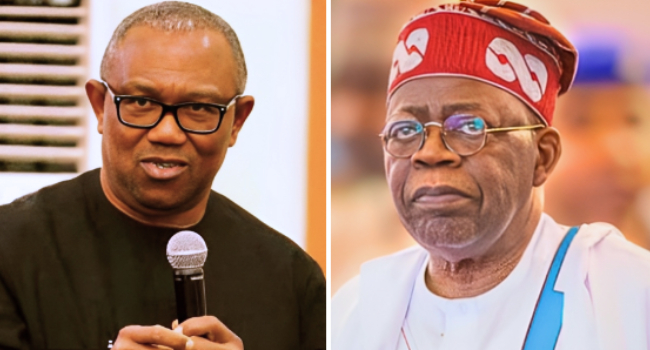
President Bola Tinubu has come under renewed criticism over the state of electricity supply in Nigeria, following reports that the Presidential Villa may be disconnected from the national grid to rely solely on solar power.
During the 2023 presidential campaign, Tinubu had made a bold pledge to Nigerians, declaring: “If I do not provide steady electricity in four years, do not vote for me for 2nd Tenure.”
However, in a post by Peter Obi, former governor of Anambra State and former Labour Party presidential candidate, he said the current situation was described as a stark contrast to that campaign assurance.
Obi said that 32 months after taking charge, and instead of “living by his powerful words,” the President “now dumps National Grid that has been performing abysmally under his watch.”
The statement referenced reports of provisions in the 2025 budget allocating ₦10 billion for solar power at Aso Rock, as well as another substantial allocation in the 2026 budget for upgrade and maintenance.
It further noted that Nigerians were “being scarcitically told that Presidential Villa has planned to be disconnected from the national grid to rely entirely on solar.”
According to Obi, the development sends troubling signals about leadership and commitment to strengthening national infrastructure.
“It is a gross neglect and deeply worrisome when the seat of power abandons the national grid,” the statement read.
“One would expect government institutions to lead efforts to strengthen and expand the grid so that other establishments, and ultimately, citizens can benefit.”
“If those in authority disconnect themselves from the system, who then will connect the ordinary Nigerian to reliable power?”
While acknowledging the importance of renewable energy, Obi maintained that the issue goes beyond environmental considerations.
“Promoting renewable energy, as solar systems do, is commendable and necessary for the future. However, this situation reflects a deeper concern: governance lacking compassion and commitment to the governed.”
The statement also drew a moral comparison between leadership and the lived realities of citizens, asserting: “You cannot tell the people to fast while feasting yourself, securing yourself while Nigerians remain unsecured.”
Obi emphasised that Nigerians understand that governance comes with challenges and that not every promise can be fulfilled entirely. However, he stressed that citizens deserve visible effort and transparency.
“Nigerians do not expect 100% fulfilment of promises, but they do expect 100% effort, accompanied by measurable improvements and clear explanations when gaps exist.”
“Leadership must serve the people, not isolate itself from their daily struggles.”
The statement concluded by urging the Federal Government to prioritise reforms that would strengthen and expand the national grid rather than create a perception of detachment from the country’s power challenges.
The Presidency is yet to react to his statement as of the time of filing this report.
Leave a Reply