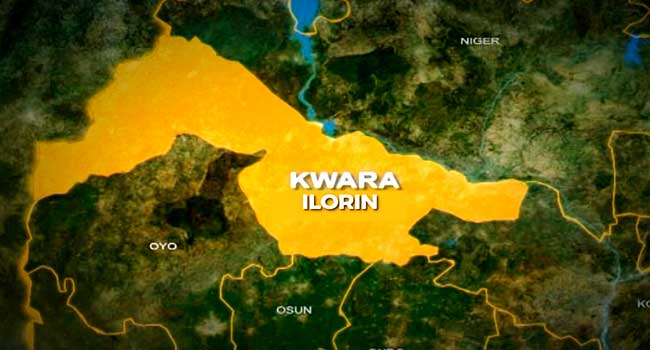
A survivor of the deadly terrorist attack on Woro community in Kaiama Local Government Area of Kwara State has revealed how suspected Boko Haram fighters used the Muslim call-to-prayer (Adhan) as a trap to lure residents out of their homes before launching a coordinated massacre that left scores dead and hundreds displaced.
Speaking during an exclusive interview with the media, the survivor, Magaji Woro, described how the attackers disguised their presence as religious preaching immediately after invading the community, creating confusion among residents who initially believed the gathering was harmless.
“This incident started as preaching from the Boko Haram members immediately they entered our community,” he said.
According to him, the attackers began assembling residents around 5 p.m. and continued their operation throughout the night until about 4 a.m., during which no security personnel reportedly arrived to intervene.
“They began around 5 p.m. in the evening and continued till 4 a.m. the next morning without any security operatives that came to our aid. They were killing people during these hours,” he told SaharaReporters.
The survivor alleged that the gunmen exploited religious practices familiar to the predominantly Muslim community, using the evening call to prayer to draw unsuspecting residents into open spaces.
“They lured us out with a call to prayer and asked people to come out and pray because it was already evening and people normally come out, so they used the call to prayer to lure us out,” he explained.
According to him, the attackers also set houses on fire and shouted for residents to come outside and help extinguish the flames, another tactic that exposed victims to ambush.
“Immediately people came out to quench the fire, they started shooting, killing and slaughtering them,” he said.
Woro further alleged that at least 176 persons were abducted during the attack, while many others were killed.
“They kidnapped 176 people and killed many. We don’t know what to do. We don’t have much power to stop them from killing us,” he added.
Expressing despair over what he described as government inaction, the survivor said residents now feel abandoned and vulnerable.
“We know it is only the government that can save us. If the government deems it fit to help us, good for them. And if the government decides not to help us, good for them, because we believe it is God that can save us, not them,” he said.
SaharaReporters had earlier reported that suspected terrorists launched a coordinated evening assault on Woro community between February 3 and 4, 2026, killing men, women and children indiscriminately in one of the deadliest attacks recorded in the country.
Among those reportedly killed were two wives of the Emir of Woro, several of his children, the Chief Imam, a school principal, a headmistress and returning students. Security sources linked the assault to a Sadiku-led Boko Haram faction believed to maintain operational ties with terrorist networks operating across the Sahel region.
The fresh testimony comes amid growing anger among displaced residents, who previously accused government officials of politicising humanitarian assistance following the massacre.
Several survivors from Woro, Baburasa and Wawa communities told SaharaReporters that the distribution of rice and other relief materials was allegedly turned into a political mobilisation exercise for the ruling All Progressives Congress (APC) rather than genuine support for victims.
“We are farmers. Food is not our problem,” one displaced woman said during earlier interviews. “What we are asking for is security so we can go back to our homes.”
Victims alleged that many genuine residents who fled after the killings were excluded from relief distribution, while non-residents allegedly benefited.
“Most of the people who collected the rice are not even from Woro,” another survivor claimed. “It looked more like a political gathering than help for victims.”
The residents specifically accused the Vice Chairman of Kaiama Local Government, Hajjia Abubakar Aishat Sadiq, of leading what they described as a politically motivated relief exercise, an allegation authorities have not publicly responded to.
Meanwhile, the Kwara State Emergency Management Agency maintained that relief materials were distributed to more than 550 affected households as part of government efforts to cushion the impact of the violence and restore normalcy.
However, survivors insist their primary demand remains security, not food aid.
“We are not begging for rice,” another displaced resident said. “We want protection. If security was provided, we would return to our farms and feed ourselves.”
Leave a Reply