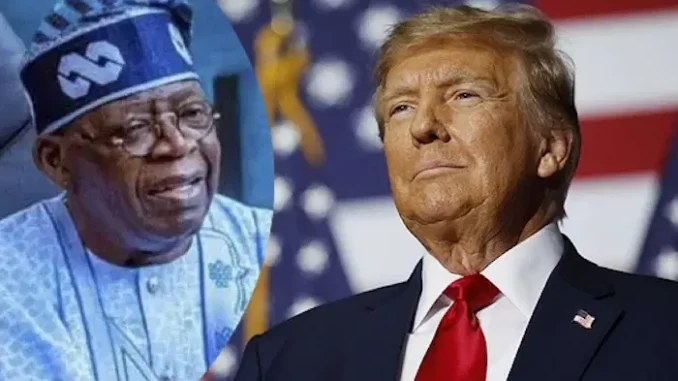
The five-year pro-Christian health agreement Nigeria signed with the United States (US) is facing a push back, with Muslim groups describing the deal as discriminatory, unjust and divisive.
The US announced on Saturday that it had signed a five-year bilateral health Memorandum of Understanding (MoU) with Nigeria to strengthen the country’s health system with a strong focus on supporting Christian faith-based healthcare providers.
In a statement, the US Department of State said the agreement was expected to expand access to essential preventive and curative services, including HIV, tuberculosis, malaria, maternal and child health and polio interventions.
SPONSOR AD
Under the MoU, the US government said it intended to commit nearly $2.1bn over five years.
“Additionally, Nigeria will increase its domestic health expenditures by nearly $3bn during the term of the MoU, the largest co-investment any country has made to date under the America First Global Health Strategy,” the statement read in part.
The agreement places particular emphasis on faith-based health institutions, especially Christian-run facilities, which play a major role in Nigeria’s healthcare delivery.
The statement reads further: “Nigeria’s 900 faith-based clinics and hospitals currently serve more than 30 percent of Nigerians,” adding that investments in these facilities are “uniquely positioned to complement efforts in public run facilities and strengthen Nigeria’s overall health infrastructure.”
The MoU was negotiated in the context of reforms by the Nigerian government aimed at protecting Christian communities from violence.
US President, Donald Trump, last month claimed on social media that the US was prepared to take military action in Nigeria in response to the alleged killing of Christians.
Trump said Christianity faced an “existential threat” in Nigeria and “numerous other countries”, drawing attention to what his administration described as widespread global persecution of Christians.
Washington has since returned Nigeria to its list of countries of “particular concern” over alleged persecution of Christians and has also imposed restrictions on the issuance of visas to Nigerian citizens.
The deal “was negotiated in connection with reforms the Nigerian government has made to prioritise protecting Christian populations from violence,” the US State Department said.
“The Trump administration expects Nigeria to continue to make progress ensuring that it combats extremist religious violence against vulnerable Christian populations,” it added.
MURIC to FG: Revoke pro-Christian pact with US
The Muslim Rights Concern (MURIC) has demanded the revocation of Nigeria’s recent health pact with the United States (US).
In a statement, MURIC’s Founder/Executive Director, Professor Ishaq Akintola, described the health agreement as pro-Christian, parochial, divisive, discriminatory and therefore unacceptable.
The group offered the alternative of evolving a similar project for Nigerian Muslims to start at the same time and to grow side by side.
“We denounce this pact in the strongest terms. It is parochial, egregious, divisive, discriminatory and therefore unacceptable. It is a serious misstep. It subjects Muslims to apartheid treatment in their own country.
“As in Animal Farm, FG has demarcated Nigerians into first class and second class citizens contrary to Section 42 of the constitution. FG has placed Muslims in the second windowless compartment,” MURIC said.
The Muslim rights group said it was “strangely enough, the US will not provide the whole fund, neither will it bring the highest,” adding that, “Nigeria will provide a higher $3.0bn which is 58.82 per cent of the total fund of $5.1 billion. This is atrocious.
“FG has signed off our common patrimony for only one faith group, the Christian group. This is the commonwealth that we all sweated for. This is the Nigerian tax payers’ money and it is going to be expended on one group only.
“The last time we checked, there was no separate Christian tax system. There was no separate Muslim tax system. All monies go into one vault. There is also no Christian central bank, no Muslim central bank. What then is the wisdom in this deal with America that seeks to make the Nigerian government spend from our collective wealth for the Christian group only?
“If we keep silent and allow this deal to go through, in the twinkling of an eye, we will soon have Christian roads, Christian railway system, Christian this and Christian that. Our hearts bleed. Who did this to Nigeria? It is neither statesmanship nor good governance.
“If it is America, we must seek other friends, other allies. Whoever dictated this Christian health scheme to us desires only one thing, namely, to break our country. If we are the architects of our own tragedy, we must find ways of pacifying the Muslims. Anything short of that is deliberate provocation of the oppressed Nigerian Muslims,” the statement added.
He further said the federal government “has always provided joint health care for all faiths as the father of all, FG must provide parity for the Muslims since it has allowed itself to be boxed into a corner by vendors of Christian genocide, a fallacy, a charade, a sham.”
Agreement unjust – Shari’ah council
Also, the Supreme Council for Sharia in Nigeria (SCSN), Kaduna State chapter, has criticised the federal government over the $2.1bn pro-Christian health agreement.
Engineer Abdul Rahman Hassan of the SCSN expressed strong dissatisfaction with the deal, describing it as unjust, discriminatory and potentially divisive.
“It is unfortunate for the Nigerian government to buy into this injustice being pushed by the United States against its own people, especially Muslims, who fought tooth and nail to bring this government to power,” he said.
Hassan questioned the stance of the United States on global religious and humanitarian issues, particularly its role in the ongoing conflict in Gaza.
“What did the US do to help Palestinian Christians when Israel was and is killing people in Gaza over the last two years?” he asked.
He cautioned Nigeria against what he described as the double standards of the United States and warned against the adoption of foreign policies capable of undermining national unity and social cohesion.
“Nigeria should be mindful of the US’s double standards. No foreign government should impose divisive policies on us as a sovereign nation,” Hassan said.
According to him, maintaining equity among religious groups is essential to sustaining peace and stability in the country.
“Religious neutrality is the only way to ease Nigeria’s fragile socio-religious situation,” he added.
Hassan further said the SCSN, Kaduna State chapter, strongly opposed the agreement in its current form and called on the federal government to ensure fairness and balance.
“We strongly condemn this injustice and urge the federal government, in the interest of balance, to extend the same gesture to Muslim-owned health facilities,” he said.
“This is a government that was strongly supported by Muslims and brought to power by their votes. It is unfair for them to be treated this way,” Hassan added.
FG defends agreement
The federal government has defended the health agreement, insisting that the funding would be deployed in an inclusive manner.
Speaking at a press conference on Monday in Abuja, the Minister of Information and National Orientation, Mohammed Idris, said the arrangement was designed to benefit all Nigerians.
“Every Nigerian will benefit from this arrangement,” Idris said.
He explained that the US would provide $2.18 billion in grant funding, while Nigeria would contribute $3 billion as counterpart funding, making it the largest co-investment by any country under America’s global health strategy.
“As I mentioned earlier, the United States Government will contribute about $2.1 billion, while the remaining $3 billion will be provided by Nigeria,” he said.
According to the minister, the agreement represents one of the most significant collaborations the United States has undertaken in the health sector.
Idris also noted that the deal reflected renewed engagement between Nigeria and the United States at a time when some observers believed Washington had distanced itself from the country.
“What is instructive is that at a time when some people think America has turned its back on Nigeria, the United States is re-engaging with Nigeria in several areas, including security and health,” he said.
He cited recent visits by US congress leaders and their public remarks as evidence of improved relations, adding that the collaboration in the health sector was aimed at driving reforms and strengthening Nigeria’s healthcare system.
“The most important thing for me is the window of opportunity this provides to re-engage with the United States of America for the benefit of our people, with mutual respect for our Constitution, traditions and culture,” Idris added.
Leave a Reply